
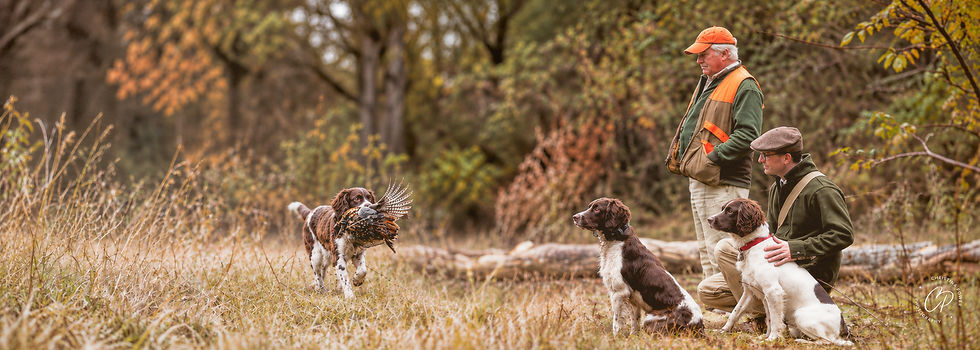


The Craney Hill Training Philosophy
Training the Dog in Front of Us
No two gun dogs are exactly alike.
They may come from the same breeding, grow up in the same home, and arrive with the same goals, yet each dog will learn, respond, and develop differently.
That is why we do not train from a fixed recipe.
At Craney Hill Kennel, we begin by reading the dog in front of us. We look at what the dog understands, where the foundation is strong, where it is missing, and what the dog is showing us through its behavior.
Before we decide what comes next, we first have to understand where the dog is now.
The Dog Is Always Telling You Something
A dog that will not retrieve, ignores a command, loses focus, or begins avoiding pressure is giving us information.
The behavior may appear to be the problem, but it is often the result of something deeper. The dog may not fully understand the lesson. The foundation may have been rushed. The timing may be unclear. The handler may be asking for more than the dog is prepared to give.
Our job is not simply to stop the behavior in front of us. It is to understand why it is happening and build the lesson in a way the dog can carry forward.
That does not mean lowering the standard. It means making sure the dog understands the expectation before being held accountable for meeting it.
Foundation Before Finish
A polished gun dog is not created through a collection of tricks.
Reliable field work begins with communication, obedience, consistency, and a clear understanding between dog and handler. These are the pieces that support everything that comes later.
Before a dog can be expected to remain steady, handle at a distance, retrieve correctly, or work through the excitement of live birds, it must first understand how to listen, respond, and stay connected to the person handling it.
We build those lessons in stages.
When the foundation is solid, advanced work becomes easier to teach and easier for the dog to understand. When the foundation is rushed, the weakness usually appears later—often when excitement, distance, birds, or pressure are added.
The finished picture is only as strong as the work underneath it.
Relationship Does Not Mean Lowering the Standard
We believe strongly in the relationship between a dog and its handler.
A dog that trusts the person handling it is more willing to work through confusion, pressure, and difficult lessons. That relationship creates confidence, communication, and the desire to remain connected in the field.
But relationship does not mean allowing inconsistency.
Dogs need clear expectations. They need to understand that a command has meaning and that the handler will follow through. They also need to know that the person on the other end of the whistle or lead will be fair, consistent, and worth listening to.
The strongest working relationships are built when the dog understands the standard, trusts the handler, and learns that the same rules apply every time.
Pressure Must Have Meaning
Pressure is part of gun dog training, but it should never replace teaching.
A correction is only fair when the dog understands what is being asked. Used with proper timing, pressure can reinforce a known lesson, strengthen accountability, and help a dog work through distractions.
Used too early, too heavily, or without understanding, pressure creates confusion.
The tool itself is rarely the most important part. Timing, judgment, and the trainer’s ability to read the dog determine whether pressure teaches the lesson or damages it.
At Craney Hill, pressure is used as part of a complete training system. It is never the entire system.
We Do Not Train for the Perfect Setup
A dog can look polished in a controlled training area and still fall apart when the picture changes.
Real hunting does not happen in perfect conditions. Birds do not always flush where expected. Cover changes. Wind changes. Distance changes. Excitement builds, and decisions must be made quickly.
Training must prepare the dog for more than the drill.
We gradually change the environment, increase distractions, and ask the dog to apply what it has learned in different situations. The goal is not a dog that performs only when everything is familiar.
The goal is a dog that remains connected, responsive, and dependable when the field becomes unpredictable.
Good Dogs Take Time
There is no shortcut around proper development.
A young dog needs time to mature. A dog with gaps in its foundation needs time to rebuild them. A dog learning advanced work needs enough repetition for the lesson to become dependable rather than temporary.
Quick results may look impressive for a short time, but training that has not been fully understood often disappears when the dog returns home or encounters greater pressure in the field.
We are not interested in creating a dog that looks trained for a few days.
We want to develop a dog whose training can hold up over time.
That requires patience, repetition, consistency, and the willingness to stay with the process long enough for the dog to truly understand.
Why Our Programs Begin With a Four-Month Minimum
Our training programs begin with a four-month minimum because meaningful development cannot be rushed into a few weeks.
The early part of the process is spent evaluating the dog, establishing communication, and determining where the dog truly is in its training. From there, we build or strengthen the foundation before moving into more advanced work.
The dog then needs time to repeat those lessons, work through confusion, and apply what it has learned in different environments.
Four months is not a promise that every dog will be finished within that period. The actual timeline depends on the dog’s age, experience, temperament, previous training, and the owner’s goals.
It is the minimum amount of time we believe is necessary to begin doing the work correctly.
We would rather be honest about the process than promise results on a timeline the dog may not be ready to meet.
We Train the Dog—Then We Train the Owner
Training does not end when the dog leaves Craney Hill.
A dog may understand Todd’s timing, body language, whistle, and expectations, but the owner must learn how to maintain that same communication. Without that understanding, even a well-trained dog can begin slipping into old habits.
That is why owner involvement matters.
We teach owners how to read their dogs, give a command clearly, follow through correctly, recognize when to slow down, and avoid creating confusion.
We want owners to understand not only what to do, but why they are doing it.
The dog and handler must eventually become a team.
We train the dog, and then we help the owner learn how to preserve and continue the work.
The Goal Is a Dog That Hunts With You
There is a difference between a dog that simply hunts and a dog that hunts in partnership with its handler.
A dog can have tremendous drive, bird-finding ability, and natural talent, yet still be difficult to handle if that talent has not been shaped through training.
Our goal is not to remove the dog’s independence or natural ability.
It is to develop control without taking away style, confidence, desire, or initiative. We want a dog that searches with purpose, responds when needed, and remains aware of the person hunting behind it.
A properly developed gun dog does not simply run through the field looking for birds.
It learns to hunt with you.
Built for the Long Term
The Craney Hill philosophy is not built around gimmicks, trends, or quick fixes.
It is built through decades of working with dogs in the field, preparing dogs for competition, helping owners become better handlers, and continuing to learn from the dogs themselves.
We believe in reading the dog, building the foundation, maintaining fair standards, and giving the process the time it deserves.
The goal is not temporary obedience.
The goal is a lasting working partnership—one that remains strong when the whistle blows, the bird flushes, and the real lesson begins.


Continue Learning
Explore more of the Craney Hill training philosophy:

