One Clean Rep Beats Ten Sloppy Ones: Why Quality Retrieves Build Better Gundogs

Updated: Mar 25
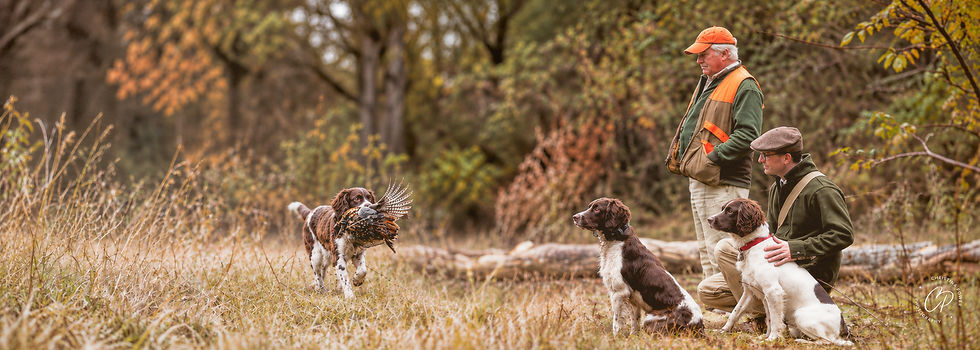
Working spaniel delivering a bird retrieve to hand.
When it comes to retrieve training, one of the biggest mistakes handlers make is assuming that more is better.
More throws. More excitement. More repetition.
But in most cases, more retrieves do not create a better retriever. They create more opportunities for the wrong habits to take hold.
A pile of sloppy retrieves does not build a polished dog. It builds inconsistency. It builds carelessness. It builds bad habits that eventually show up in your delivery, your marking,
your steadiness, and your control.
At Craney Hill Kennel, we believe good retrieve training is not about how many times your
dog goes. It is about how well your dog performs each repetition.
Every retrieve teaches something.
That is the part many handlers miss.
Every retrieve is a lesson. The only real question is whether you are teaching the right one.
If the dog leaves without focus, hunts without commitment, grabs poorly, parades on the
return, spits the bird, loops on delivery, or crashes through the entire picture in a state of excitement, that repetition still taught something. It just did not teach what you intended.
Dogs learn from repetition, but repetition alone is never the goal. Repeating poor work only makes poor work more familiar.
That is why one clean mark with attention, purpose, and a proper finish is worth far more
than ten chaotic retrieves that lower the standard every time.
Sloppy retrieves become standards faster than most handlers realize.
This is where retrieve work starts to slide.
A handler throws one more because the dog looks excited. Then another because the last
one was not great. Then another because they want to end on a better rep. Before long, the dog has rehearsed the same messy behavior over and over, and the handler is left wondering why the retrieve is getting worse instead of better.
The answer is usually simple: the standard dropped, and the repetitions kept going.
Dogs do not separate practice from performance. What they rehearse in training is what
they begin to offer as normal.
If you repeatedly allow poor lines, lazy pickups, loose returns, noisy mouths, weak delivery, or frantic behavior, those things stop being occasional mistakes and start becoming the
dog's version of the retrieve.
Quality reps create understanding.
A clean retrieve should be intentional from start to finish.
~Your dog should leave with focus.
~Your dog should go with purpose.
~Your dog should pick up cleanly.
~Your dog should return directly.
~Your dog should deliver calmly.
That kind of rep builds clarity.

It teaches the dog exactly what the job is. It keeps the picture simple. It protects momentum
without sacrificing standards. It gives you something you can build on.
This is how polished retrieve work is made. Not by flooding the dog with excitement, but by stacking successful, well-executed repetitions that reinforce the same standard every time.
More is not always better
A common training mistake is confusing drive with progress.
A dog that is flying around wildly, launching early, snatching birds, and racing back out of control may look enthusiastic, but enthusiasm without structure does not produce reliable field work.
Real progress is not measured by how many retrieves you fit into a session. It is measured by how many good decisions your dog made during those reps.
Sometimes that means doing three excellent retrieves and putting the dog up.
Sometimes that means doing one clean retrieve, recognizing that the lesson was understood, and ending there.
There is discipline in stopping while the standard is still high.
If the retrieve is getting messy, simplify the picture.
When retrieve work starts to break down, the answer is rarely to keep pushing.
Shorten the distance.
Reduce the excitement.
Slow the pace.
Clean up the setup.
Ask for more focus.
Require a better finish.
The goal is not to make the dog do more. The goal is to make the dog understand more
clearly.
Good training often looks less dramatic than people expect. It is controlled. It is deliberate.
It is thoughtful. And that is exactly why it works.
Protect the standard you want in the field
Field performance does not appear by accident.
If you want a dog that marks well, picks up confidently, returns cleanly, and delivers to hand without nonsense, you have to protect those standards in training. You cannot let
sloppy work slide during practice and expect polished work when pressure rises.
Retrieve training should build habits you can trust.
That means fewer junk reps. Fewer emotion-driven throws. Fewer retrieves done just to wear the dog out or get one more in.
More intention. More clarity. More accountability. More quality.
Because in the end, one clean rep really does beat ten sloppy ones.
If your retrieve training feels chaotic, the answer is not usually to do more.
Do less. Do it better. Raise the standard. Reward the right work.
Great retrievers are built through clear expectations and quality repetitions, not by piling on retrieves and hoping it comes together later.
If you want retrieve training done right, start by valuing the quality of the rep over the
quantity of the session.
Retrieve training done right starts here:
Fewer retrieves often produce better results.
Sloppy reps create long-term problems.
Clean marking, pickup, return, and delivery matter.
Stop before the standard drops.
FAQ section
How many retrieves should I do in one training session?
There is no perfect number for every dog, but the goal should always be quality over
quantity. A few clean retrieves with focus, purpose, and a proper return will do more for
your dog than a long session full of sloppy work.
Why is my dog getting worse with more retrieve reps?
Because repeated sloppy work becomes a habit. If your dog is rehearsing poor marking,
loose returns, weak delivery, or overexcitement, more repetitions often strengthen the problem instead of fixing it.
What does a clean retrieve look like?
A clean retrieve starts with focus, includes a committed line to the mark, a proper pickup, a direct return, and a calm delivery to hand.
Should I stop training when I get one good retrieve?
Often, yes. One excellent rep can be a far better place to end than pushing for several more and lowering the standard.
How do I fix messy retrieve work?
Simplify the picture. Shorten the distance, reduce pressure, slow the session down, and hold the dog accountable for one complete, clean repetition at a time.

Make this summer count with training that moves your dog forward.
Reserve your training camp spot at www.spanieltraining.com


