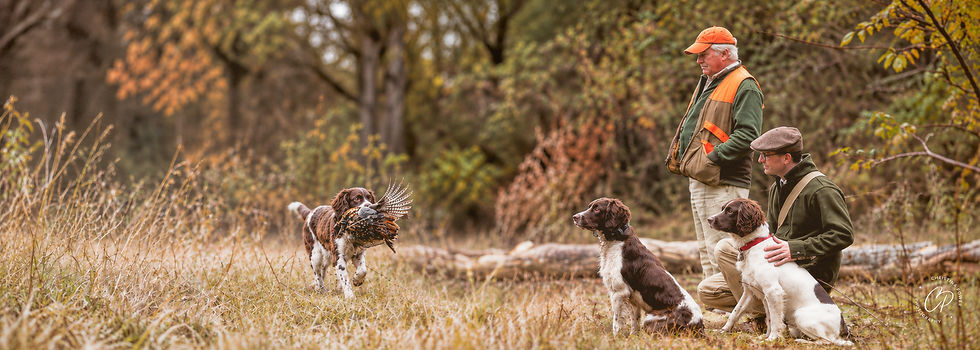
Control comes from connection—not a collar..

Updated: Mar 15
"If Your Gun Dog Only Listens When the E-Collar is On… You Don’t Have Control — You Have a Crutch."

It’s a hard truth for many hunters and field trial handlers: the e-collar is a tool, not the relationship. Relying on it as your only connection to your dog will cost you birds, frustrate your hunting buddies, and ultimately rob you of the joy that comes from hunting with a truly trained partner.
Gun Dog Training: More Than Just Pushing a Button
If you find yourself constantly reaching for the e-collar remote every time your dog ignores a command, it’s time to take a step back and rethink your approach to training. An e-collar can be a valuable tool in the right hands, but it should never replace the connection, trust, and understanding you build with your dog.
When your gun dog only responds because of the e-collar, it means your foundation is missing. True control comes from a dog who understands your commands, respects your leadership, and trusts you enough to work for you—whether or not you’re carrying that remote.
The Importance of Building a Strong Foundation
Imagine this: you’re in the grouse woods or upland fields, and birds flush unexpectedly. You need your dog to be steady, obedient, and reliable without hesitation. If you’re forced to yell or repeatedly press that button, you’re creating chaos. The noise and confusion will send birds flying long before you or your hunting partners can get into position.
Hunting should be about teamwork, not tension. Your hunting buddies want a dog that’s responsive and easy to work with—not one that needs constant correction. Believe me, the more you have to yell, the fewer birds you’ll see.
Training Strategies for Success
The solution? Train early, train often, and don’t wait until the week before hunting season or a field trial to fix problems. If you’re unsure where to start, seek out a professional trainer who can help lay the foundation you and your dog need for success.
The real magic happens when you and your dog work together as a team—reading each other, anticipating each other’s moves, and enjoying the hunt together. That’s when the memories are made.
Embracing the Journey
Training your gun dog is a journey, not a destination. Each session is an opportunity to strengthen your bond. I remember the first time my dog and I successfully worked together on a retrieve. It was exhilarating! We were in sync, and it felt like we were dancing through the field. Those moments are what hunting is all about.
Common Mistakes to Avoid
Many owners make the mistake of relying too heavily on the e-collar. It’s easy to fall into that trap. But think about it: if your dog only listens when the collar is on, what happens when it’s off? You need to foster a relationship based on trust and understanding.
The Role of Consistency
Consistency is key in training. Use the same commands and gestures every time. This helps your dog understand what you expect. If you’re inconsistent, your dog will be confused. And confusion leads to frustration—for both of you!
The Power of Positive Reinforcement
Positive reinforcement can work wonders. Reward your dog for good behavior. It could be a treat, praise, or playtime. This builds a positive association with obeying commands. Over time, your dog will learn that listening to you is rewarding.
Understanding Your Dog's Behavior
Take time to observe your dog’s behavior. What motivates them? Is it food, play, or praise? Understanding what drives your dog can help you tailor your training approach.
Building Trust Through Communication
Communication is vital. Use clear commands and body language. Your dog should know what you want without confusion. This clarity builds trust and strengthens your bond.
The Joy of Hunting Together
When you and your dog are in sync, hunting becomes a joy. You’ll find yourselves anticipating each other’s moves, creating a seamless partnership. That’s the ultimate goal, isn’t it? To enjoy the hunt together, creating memories that last a lifetime.
Conclusion: A Call to Action
So, if you find yourself relying too much on the e-collar, take a step back. Reassess your training methods. Focus on building a strong foundation of trust and communication with your dog. Remember, the best hunts are those where you and your dog work together as a team.
Let’s transform our dogs into well-behaved, effective partners for hunting and competition.


gun dog training tips
e-collar training for hunting dogs
spaniel training for field trials
upland bird dog obedience
professional dog training for hunting season
grouse hunting dog training
steady to flush training methods
hunting dog control without e-collar


