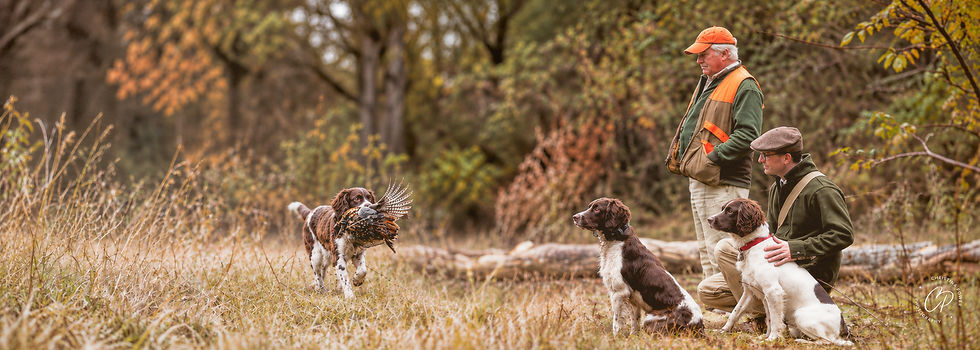
What Wild Birds Teach That Training Birds Can't

Training Gun Dogs on Wild Birds
We can teach obedience. We can teach a dog to quarter. We can work on retrieving, steadiness, delivery, handling and all the pieces that eventually have to come together to make a finished gun dog.
But there are some things I can't teach.
For those, I need wild birds.
A dog that consistently produces wild birds has to learn to beat that bird at its own game, on its own ground. Wild birds know where they live. They know the cover. They know the escape routes. And they know when something has entered their world that doesn't belong there.
The dog has to figure out the rest.

The Bird Becomes the Teacher
Training birds are extremely important to what we do. They allow us to create situations, repeat lessons and teach specific pieces of the work.
But eventually, I want to know what the dog does when I can't control the situation.
That's where wild birds are different.
You don't get to put the bird where you want it. You don't know exactly where the scent is going to be. You can't ask the bird to sit tight because the dog needs another chance.
The wind changes. Birds move. Scent moves. Cover changes.
And the dog has to start putting all of that together.
That's when you begin seeing a dog learn to find birds instead of simply learning to hunt for them.
There is a difference.
The First Few Days Aren't Always Pretty
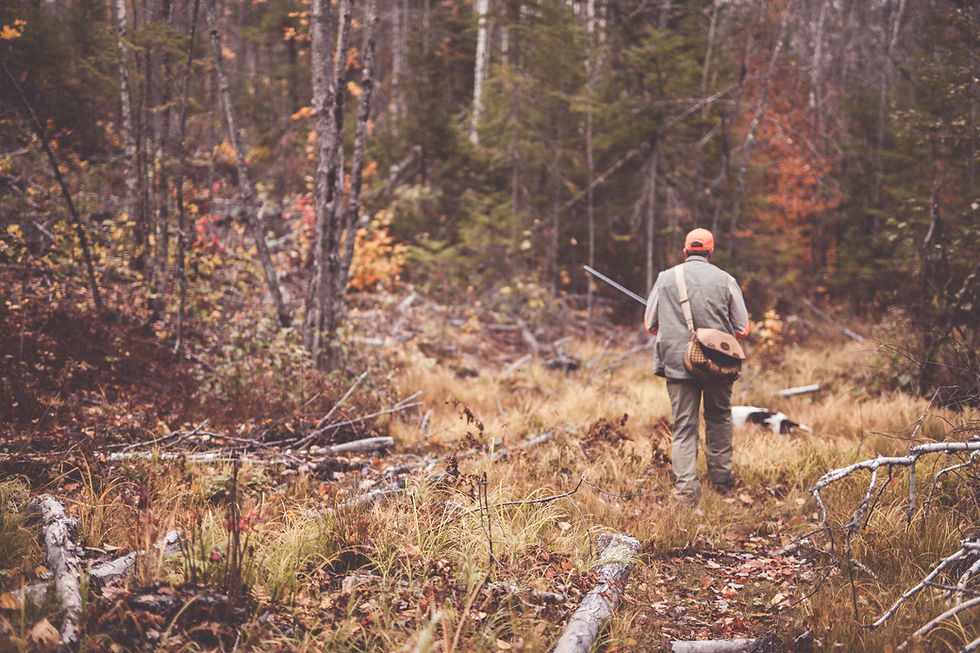
We see it every time we take young dogs into the grouse woods.
Some of them don't know what to make of it at first.
They want to run the paths because the paths are easy. The woods aren't.
The woods are dark and tight. There are alder swamps, evergreens, mature timber, young growth, water, sticks, leaves and branches everywhere. Before some young dogs can learn to find birds in that environment, they first have to learn that they're comfortable being there.
So we give them time.
We take them to different coverts and let them run.
And we don't do much.
That's important.
A dog may get birdy and never find the bird. A grouse may flush twenty yards ahead and the dog doesn't even know it happened. The dog may get there late.
That's all right.
Tomorrow we go again.
“The bird becomes the teacher.”
Sometimes You Have to Quit Helping
This may be the hardest part for people to understand.
We spend so much time training dogs that our instinct is to help them when they're struggling.
But there comes a point when helping becomes interference.
If I keep showing the dog where to go, keep handling it into cover, keep blowing the whistle and keep trying to manufacture success, I'm solving the problem.
I need the dog to solve it.
So in the grouse woods, much of our job becomes pretty simple.
Feed them. Air them. Load them. Take them to good cover.
Then watch.
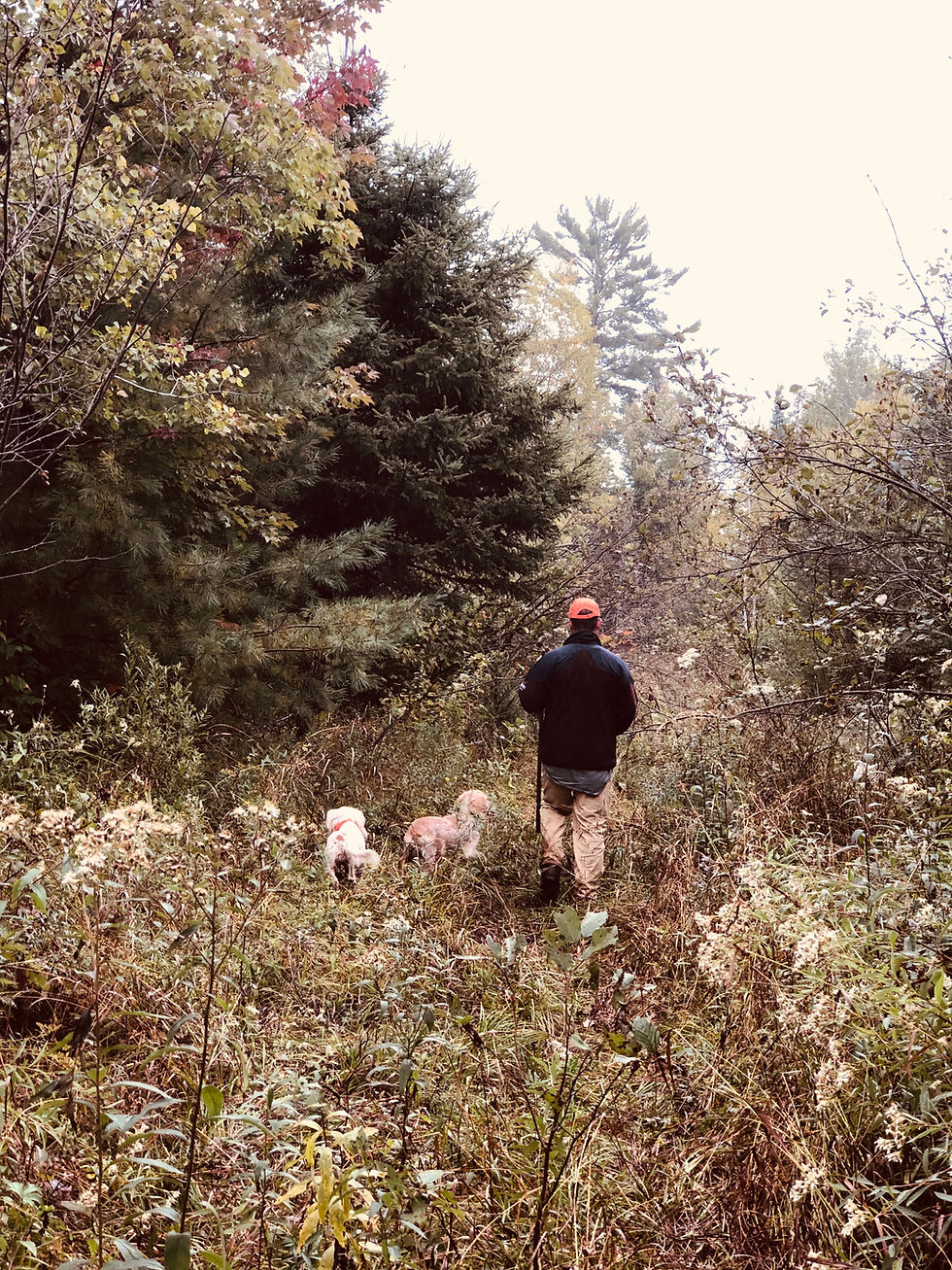
A young dog might run for 45 minutes to an hour with very little from us. Over several weeks, you begin to see things change.
The path isn't quite as interesting anymore.
The dog starts punching into cover.
It begins recognizing places that ought to hold birds. It learns something about foot scent. It starts using the wind differently. It begins working through cover instead of simply running through it.
And eventually, with some dogs, you can almost see the moment when they start understanding the game.
That's when it gets interesting.
The Woods Don't Lie
One of the things I value most about wild birds is that they give you an honest look at a dog.
Some dogs begin to separate themselves.
They get bolder. They hunt harder. They start finding places that hold birds without being sent there. You begin seeing initiative. Then confidence. And sometimes that confidence turns into an absolute obsession with finding birds.
Other dogs struggle.
That doesn't necessarily mean they're bad dogs.
It means I've learned something about them.
Maybe that dog needs more confidence. Maybe it needs easier opportunities. Maybe it needs more bird contacts. Maybe something we thought the dog understood in training isn't as solid as we thought.
That's information.
And good trainers need that information.
The Dogs That Struggle May Gain the Most
The dogs everyone notices are usually the ones that take to wild birds immediately.
But I'm not convinced they're always the dogs that benefit the most.
I've watched dogs go to the grouse woods and appear to accomplish very little. They don't get bold. They don't find many birds. They don't seem to make the progress another dog makes.
Then we bring them home.
And something is different.
They're more confident. They're better students. They're more engaged in their bird work. Things we were trying to teach before the trip suddenly begin making more sense to them.
The woods did something.
Sometimes that experience helps turn around a dog we weren't sure about. Maybe that dog never becomes the greatest bird dog we've ever trained. That's not the point.
The point is that the dog became more of what it was capable of becoming.
And that's training too.

You Can't Recreate Wild
We can prepare a dog.
We can give it the foundation it needs to succeed.
But we can't manufacture everything a wild bird teaches.
Wild birds teach a dog to adjust.
They teach persistence.
They build confidence.
They expose weaknesses.
And perhaps most importantly, they require a dog to think while still remaining connected to its handler.
Not a dog waiting for us to provide every answer.
And not a dog hunting entirely for itself.
A dog that has learned how to hunt with us.
That is why we keep going back to wild birds.
Not simply to shoot birds.
To let the birds finish teaching some of the lessons that we can't.
Todd's Last Thought
You can prepare a dog in training. Wild birds show you what the dog really understands.
— Todd Agnew


